

Alternator
Alternator Supplier & Manufacturer China — E-STAR Auto Parts

E-STAR is a professional Chinese manufacturer and supplier of alternators and starters. We possess over 15 years of experience in OEM and ODM customized production.
Our alternator product line covers replacements for DENSO, Mitsubishi, Nikko, Prestolite, Valeo, Bosch, Isuzu, Delco, as well as all mainstream models for passenger vehicles, yachts, commercial trucks, construction machinery, tractors and agricultural equipment.
All our automotive alternators are certified under ISO9001 quality management system. Every product undergoes rigorous raw material inspection and finished-product durability life testing.
We offer full customization services, including adjustable voltage and power output, custom housing colors, tailored terminal connectors, and sample-based design development. We support small-batch sample trials, flexible minimum order quantities (MOQs), and fast lead times for mass production.
Contact our sales team right away to secure direct factory wholesale pricing and customized alternator solutions for your auto parts distribution business.
-
![Mitsubishi A3TV9171B A4TR8471BT,MAN 51261017351 51261017355 MAN TGL D0836LFLAD D0834LFL66 D0834LFL67]() Mitsubishi A3TV9171B A4TR8471BT,MAN 51261017351 512610173...MAN TGL 10.150 4.6 [D0834LFL66] 02.2020- MAN TGL 10.150 4.6 [D0834LFLAA] 02.2020- MAN TGL 10.180 4.6 [D0834LFL67] 02.2020- MAN TGL 10.180 4.6 [D0834LFLAB] 02.2020- MAN TGL 10.180...read more
Mitsubishi A3TV9171B A4TR8471BT,MAN 51261017351 512610173...MAN TGL 10.150 4.6 [D0834LFL66] 02.2020- MAN TGL 10.150 4.6 [D0834LFLAA] 02.2020- MAN TGL 10.180 4.6 [D0834LFL67] 02.2020- MAN TGL 10.180 4.6 [D0834LFLAB] 02.2020- MAN TGL 10.180...read more -
![MITSUBISHI:A003TV9171 A3TV9171BZ9 Man:51.26101-7337、51.26101-7348 MAN TGX/TGL/TGS/TXS/LIONS]()
-
![Prestolite AVI168J3006 Cummins 6516001, C6516001 DONGFENG DFH4180]() Prestolite AVI168J3006 Cummins 6516001, C6516001 DONGFENG...DONGFENG DFH4180 GX 13.0 [Cummins ISZ520_52] 2024-read more
Prestolite AVI168J3006 Cummins 6516001, C6516001 DONGFENG...DONGFENG DFH4180 GX 13.0 [Cummins ISZ520_52] 2024-read more -
![Denso 1012111130, 1012111131 JOHN DEERE RE70268, RE72916 JOHN DEERE AGRICULTURAL TRACTOR 5410]() Denso 1012111130, 1012111131 JOHN DEERE RE70268, RE72916 ...JOHN DEERE AGRICULTURAL TRACTOR 5410 4 CYL. 4.52L 4483CC 273CID 1998-2000 JOHN DEERE AGRICULTURAL TRACTOR 5420 4 CYL. 4.52L 4483CC 273CID 2001-2004 JOHN DEERE AGRICULTURAL TRACTOR 5510 4 CYL....read more
Denso 1012111130, 1012111131 JOHN DEERE RE70268, RE72916 ...JOHN DEERE AGRICULTURAL TRACTOR 5410 4 CYL. 4.52L 4483CC 273CID 1998-2000 JOHN DEERE AGRICULTURAL TRACTOR 5420 4 CYL. 4.52L 4483CC 273CID 2001-2004 JOHN DEERE AGRICULTURAL TRACTOR 5510 4 CYL....read more -
![Denso 100211-1640、101211-8961、DAN968 Kubota 1588164200 T106515682 DAIHATSU CUORE II HIJET Platform]() Denso 100211-1640、101211-8961、DAN968 Kubota 1588164200 T1...DAIHATSU CUORE II (L80, L81) 0.8 (L80) ED10 11.1989-12.1990 DAIHATSU CUORE II (L80, L81) 0.8 (L80) ED10 09.1985-06.1990 DAIHATSU CUORE II (L80, L81) 0.8 4WD...read more
Denso 100211-1640、101211-8961、DAN968 Kubota 1588164200 T1...DAIHATSU CUORE II (L80, L81) 0.8 (L80) ED10 11.1989-12.1990 DAIHATSU CUORE II (L80, L81) 0.8 (L80) ED10 09.1985-06.1990 DAIHATSU CUORE II (L80, L81) 0.8 4WD...read more -
![Magneti Marelli 63320040, 63320122 FIAT 46231658, 71724052 FIAT Cinquecento 1.1 Sporting 170 176B2.000]() Magneti Marelli 63320040, 63320122 FIAT 46231658, 7172405...FIAT Cinquecento 1.1 Sporting 170 [176B2.000] 1994-1998 FIAT Palio 1.1 178 [178B9.033] 1997-2003 FIAT Panda I 1.1 141 [176B2.000] Fire 1992-1997 FIAT Panda I 1.1 4x4 141 [187A1.000] Fire 2000-2004...read more
Magneti Marelli 63320040, 63320122 FIAT 46231658, 7172405...FIAT Cinquecento 1.1 Sporting 170 [176B2.000] 1994-1998 FIAT Palio 1.1 178 [178B9.033] 1997-2003 FIAT Panda I 1.1 141 [176B2.000] Fire 1992-1997 FIAT Panda I 1.1 4x4 141 [187A1.000] Fire 2000-2004...read more -
![Iskra AAK4650 , 11.204.976 , 11204976 BOBCAE 7015581 7283175 BOBCAE S16 S18]()
-
![Prestolite 8EK2004D 8MR2340, 8MR2341 TK 10412195, 10412198 THERMO KING TK244.TK366.TK388]() Prestolite 8EK2004D 8MR2340, 8MR2341 TK 10412195, 1041219...THERMO KING HK 100/ KD30/SB II 30 DI TC [TK244.TK366.TK388] 1989-read more
Prestolite 8EK2004D 8MR2340, 8MR2341 TK 10412195, 1041219...THERMO KING HK 100/ KD30/SB II 30 DI TC [TK244.TK366.TK388] 1989-read more -
![Prestolite AVI147E3005 AVI147S3123HD IVECO 2995978 4892318 Irisbus ACCESS BUS IIIVECO EUROCARGO I-III]() Prestolite AVI147E3005 AVI147S3123HD IVECO 2995978 489231...Heuliez GX 2 GX427|F2BE3682C / F2BE3682A|11.2007-12.2014GX 3 GX337|F4AFE612F|09.2013- Irisbus ACCESS BUS II GX127 / GX127L|F4AE3682C / F4AE3682E|03.2006-12.2013PROWAY...read more
Prestolite AVI147E3005 AVI147S3123HD IVECO 2995978 489231...Heuliez GX 2 GX427|F2BE3682C / F2BE3682A|11.2007-12.2014GX 3 GX337|F4AFE612F|09.2013- Irisbus ACCESS BUS II GX127 / GX127L|F4AE3682C / F4AE3682E|03.2006-12.2013PROWAY...read more -
![HYUNDAI / KIA 37300-93500、37300-93501 2032607.1 SANDO HYUNDAI HD HD 270 HD 35 D4DC]() HYUNDAI / KIA 37300-93500、37300-93501 2032607.1 SANDO HYU...HYUNDAI HD HEAVY HD 270 D6CB38 09.2006- HYUNDAI HD LIGHT HD 35 D4DC 09.2007-read more
HYUNDAI / KIA 37300-93500、37300-93501 2032607.1 SANDO HYU...HYUNDAI HD HEAVY HD 270 D6CB38 09.2006- HYUNDAI HD LIGHT HD 35 D4DC 09.2007-read more -
![SAWAFUJI 0201-252-1013 0201-252-1060 ISUZU 8-97873688-0 8-98219313-2 HITACHI ZAXIS-7 ZX530LCH-7 6WG1]() SAWAFUJI 0201-252-1013 0201-252-1060 ISUZU 8-97873688-0 8...HITACHI ZAXIS-7 ZX530LCH-7 6WG1read more
SAWAFUJI 0201-252-1013 0201-252-1060 ISUZU 8-97873688-0 8...HITACHI ZAXIS-7 ZX530LCH-7 6WG1read more -
![MITSUBISHI A004TR6791 A4TRG891AM Scania 2191880, 570889, 579274 SCANIA P450 12.7L [DC13143] SCANIA R450 12.7L [DC13148]]() MITSUBISHI A004TR6791 A4TRG891AM Scania 2191880, 570889, ...SCANIA P450 12.7L [DC13143] 2016- / SCANIA R450 12.7L [DC13148] 2016- / SCANIA R500 12.7L [DC13146] 2016- / SCANIA R580 16.4L [DC16102] 2016-read more
MITSUBISHI A004TR6791 A4TRG891AM Scania 2191880, 570889, ...SCANIA P450 12.7L [DC13143] 2016- / SCANIA R450 12.7L [DC13148] 2016- / SCANIA R500 12.7L [DC13146] 2016- / SCANIA R580 16.4L [DC16102] 2016-read more


![MITSUBISHI A004TR6791 A4TRG891AM Scania 2191880, 570889, 579274 SCANIA P450 12.7L [DC13143] SCANIA R450 12.7L [DC13148]](/uploads/41890/small/mitsubishi-a004tr6791-a4trg891am-scania696d4.jpg?size=380x0)
E-STAR As a leading China alternator supplier, we produce full-series aftermarket & OEM replacement alternators for multi-scenario industrial & automotive applications. Our catalog includes alternators for passenger cars, light commercial vans, heavy-duty trucks, buses, excavators, loaders, tractors and farm machinery, compatible with global mainstream electrical system brands. All listed alternator models have complete OEM cross-reference numbers for easy matching for your inventory sales.
Wide Application Fields of E-STAR Auto Alternators
E-STAR alternators feature ultra-wide compatibility to cover nearly all mainstream vehicle and equipment series globally. Our replacement alternators perfectly match original specifications for passenger cars, heavy-duty commercial trucks, construction machinery, agricultural tractors and harvesters, supporting global auto parts distributors with one-stop alternator sourcing solutions.

Passenger Vehicles
Our automotive alternators fit all mainstream passenger car brands across Asia, Europe and America, including Toyota, Honda, Hyundai, KIA, Ford, GM, Volkswagen, BMW and Mercedes-Benz. Whether you need alternators for compact daily cars, mid-size sedans or luxury premium vehicles, we provide OEM-equivalent replacement units with stable power output.

Commercial & Heavy-Duty Trucks
For long-distance transportation and logistics fleets, we supply durable heavy-duty alternators compatible with MAN, DAF, Iveco, Scania, Isuzu and Hino. These truck alternators adopt reinforced internal components to withstand harsh long-hour driving, high temperature and bumpy road conditions.

Construction Machinery Alternators
Our heavy-load alternators are widely applied to engineering equipment powered by Cummins, Kubota, Caterpillar and Komatsu. Suitable for excavators, loaders, bulldozers and road rollers working in mining, building and outdoor construction sites, they maintain steady charging performance under extreme working environments.

Agricultural Tractors & Harvesters
Specialized alternators for farm machinery match John Deere, Massey Ferguson and Prestolite original equipment. Designed for tractors, grain harvesters and farming machinery, they resist dust, mud and variable weather on farmlands, delivering reliable power for all agricultural operation seasons.
Factory Strength & Core Production Advantages
OEM & ODM Customization Capability
Customizable technical specifications include 12V / 24V output voltage, adjustable output current, customized pulley dimensions and modified terminal wiring. We support laser engraving of your private brand logo on alternator housings, alongside standard neutral export cartons and custom branded color packaging. Our R&D team can develop exclusive alternator models tailored to your unique requirements based on your engineering drawings or physical sample supplies.

Rigorous Quality Control System & Global Export Certifications


We implement full-process quality inspection covering raw copper winding material testing, rotor & stator aging durability tests, rectifier & voltage regulator performance verification, and full-load continuous operation trials for finished alternator units. Our manufacturing facility is certified to ISO9001 Quality Management System standards and holds CE export certification. Every alternator we produce complies with European aftermarket automotive spare parts standards.
Large-Scale Production Capacity & Stable Supply Chain
We operate two modern automated production workshops with a monthly manufacturing capacity exceeding 80,000 automotive alternators. Our robust, integrated raw material supply chain eliminates seasonal stock shortages, guaranteeing consistent, on-time inventory fulfillment for our long-term wholesale distribution partners.

Wholesale Procurement Terms (MOQ, Samples, Lead Time & Shipment)
1.Sample Service: Free samples are available for evaluation, with the buyer responsible for all courier shipping fees. Sample production and delivery lead time: 3–7 working days.
2.Minimum Order Quantity (MOQ) Policy: Flexible minimum order quantities are offered. Stock standard alternator models accept small MOQs starting at 10 units, while customized ODM alternators carry an MOQ of 300 units.
3.Mass Production Lead Time: Stock standard orders: 7–10 working days; Custom OEM/ODM bulk orders: 20–45 working days.
4.Packaging & Logistics: Products are packed in standard neutral export cartons, with pallet loading available for sea freight. We cooperate with trusted international freight forwarders and support sea freight, air freight and express delivery to all global ports, covering Southeast Asia, Europe, North America, the Middle East and Africa markets.

The car alternator generator is a part of the electrical system; it's basically your car's "solar panel," generating power while your car moves. But, differently from the solar panel in our analogy, it uses the vehicle's mechanical force. The engine runs a belt to spin a rotor inside the alternator, so they work together. This belt turns the rotor, creating a mechanical movement that generates power. Then, the alternator sends that power to many of the vehicle's electrical systems, including the battery; this ends up in a consistent loop of power source.

What are the key components of an engine?
Choose the plan that suits you best.

alternator rotor
The rotating electromagnet inside the alternator. When a small amount of electrical current (from the battery) is fed to it through the brushes and slip rings, it becomes a spinning magnet.(alternator rotor)

alternator stator
A stationary ring of copper wire coils that surrounds the rotor. As the rotor's magnetic field spins, it induces an electrical current in the alternator stator windings.

alternator rectifier
The current generated in the stator is Alternating Current (AC). Cars use Direct Current (DC). The alternator rectifier is a one-way valve for electricity that converts the AC into DC.

alternator voltage regulator
This is the brain of the operation. It monitors the vehicle's electrical system voltage and controls the amount of current sent to the rotor. By increasing or decreasing the rotor's magnetic strength, it ensures the alternator produces just the right amount of power—not too little (which would drain the battery) and not too much (which would fry the battery and electrical components). alternator voltage regulator are built into the alternator itself.

This is a fundamental question for understanding how a car works.
An ac alternator job is to generate electricity for your car while the engine is running.
Think of it as your car's own onboard power plant. Its two critical functions are:
1.To power all of the car's electrical systems while driving (lights, radio, AC, etc.).
2.To recharge the battery after it supplied the massive jolt of electricity needed to start the engine.
If your car had to rely only on the battery to power everything, the battery would be drained in a matter of minutes. The ac alternator constantly produces electricity to keep everything running and the battery full.
Yes, a car can start with a bad alternator, but only if the battery has enough charge.
Here’s the detailed explanation of why and what happens:
The Roles of the Battery and vehicle alternator.
Battery's Job: To store a large amount of electrical energy and release it in a short, powerful burst to start the engine (power the starter motor and ignition system).
Alternator's Job: Once the engine is running, the vehicle alternator takes over. It generates electricity to power all the vehicle's electrical systems (lights, radio, A/C, etc.) and, crucially, recharges the battery to replace the energy used to start the car.
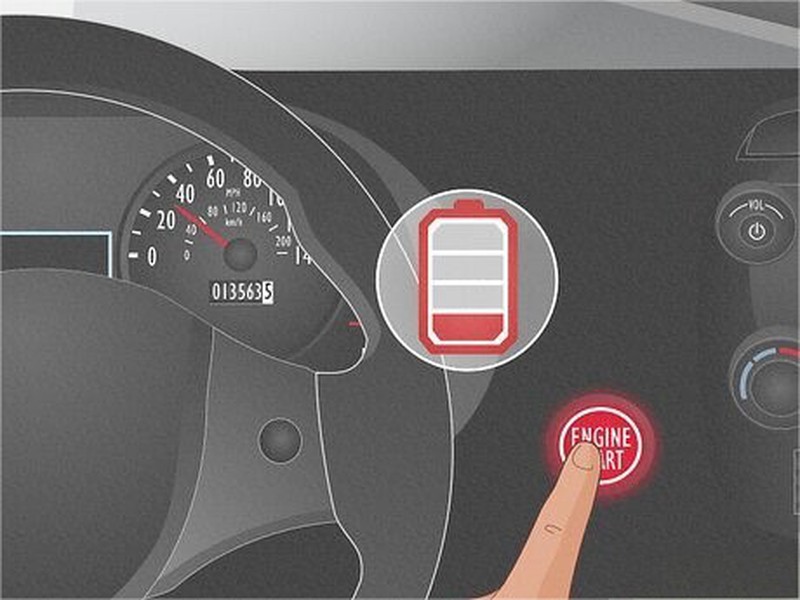
What Happens with a Bad Alternator?
1.Starting the Car: The act of starting the engine depends almost entirely on the charge stored in the battery. If your battery is fully charged, the car will start normally even if the car alternator is completely dead. You could theoretically remove the alternator from the car, and it would still start (though this is not recommended!).
2.After Starting - The Critical Part: Once the engine is running, the alternator is supposed to take over. If the alternator is bad:
The vehicle will now be running solely on the finite amount of energy left in the battery.
The battery will not be recharged and will quickly be drained by the engine's spark plugs, fuel injectors, and all other electrical accessories you have on.
You will likely see the red battery warning light (or sometimes a "ALT" or "GEN" light) illuminated on your dashboard.

3.The Eventual Stall: As the battery voltage drops, there won't be enough power to run the essential components that keep the engine running, primarily the ignition system (spark plugs) and fuel injectors. The engine will begin to run roughly, your lights will dim dramatically, and then the car will stall and shut off. How long this takes depends on the battery's health and the electrical load, but it's usually within a few minutes to maybe 20-30 minutes.
how to clean alternator
Safety Warning
1.Disconnect the Battery: ALWAYS disconnect the negative terminal of your car battery before starting. The alternator is directly connected to the battery, and failing to disconnect it can cause a short circuit, severe sparks, damage to the alternator's internal diodes, or an electrical fire.

The Alternator is NOT Waterproof: While it's mounted in an engine bay that gets wet, the alternator has vents for cooling. You must never pressure wash it or soak it directly with a high-pressure stream of water. This will force water and contaminants inside, destroying it.
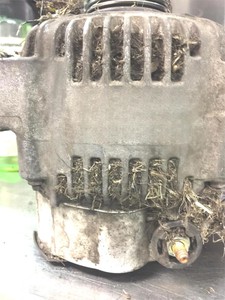
Work on a cold engine. A hot alternator can cause cleaning solutions to evaporate too quickly, leaving residue, and you risk burning yourself.

The Safe ac alternator "Maintenance" Clean
This method is for general cleaning without removing the alternator. It's perfect for cleaning the exterior car alternator casing and the alternator pulleys.
Steps:
1.Disconnect the Battery: As stated above, disconnect the negative battery terminal and tuck it away from the post.
2.Locate the Alternator: Identify the alternator. It's usually driven by the serpentine belt and has a thick red wire (power output) connected to the back.

3.Dry Brush & Wipe: Use your soft-bristle brush and wire brush to gently knock loose and brush away any dry dirt, dust, or caked-on grime from the casing, mounting brackets, and especially the front pulley. Wipe what you can with a dry cloth.
4.Apply Cleaner (The Right Way):
DO NOT spray the cleaner directly onto the alternator. The force and volume of liquid can be driven inside.
Spray a short burst of electrical contact cleaner or brake cleaner onto your soft-bristle brush or a cloth.

Gently scrub the exterior of the alternator, focusing on oily or greasy spots. The cleaner will dissolve the grime and evaporate quickly without leaving a residue.
5.Clean the alternator pulleys Grooves: This is critical for preventing belt squeal. Use a pick, small screwdriver, or toothbrush to carefully clean out the grooves of the pulley. Any built-up rubber or grit will cause noise and wear out your new belt prematurely.

6.Wipe Down: Use a clean, dry microfiber cloth to wipe down the entire unit, removing any dissolved dirt and excess cleaner.
7.Final Check & Reconnect: Do a visual check to ensure everything is clean and dry. Reconnect the negative battery terminal.
how to diagnose alternator problems
Diagnosing a broken alternator is a crucial skill, as a broken alternator will eventually leave you stranded. The symptoms often overlap with a weak battery, so it's important to know how to tell the difference.
Here is a comprehensive guide on how to diagnose bad alternator problems, from simple observations to definitive tests.
Understand the Symptoms
Your car will usually give you several warnings before the alternator fails completely. Look for these common signs:
1.Warning Lights: The most obvious is the battery or ALT (alternator) light on your dashboard. It illuminates when the charging system voltage is below a certain threshold.

2.Dim or Flickering Lights: Headlights that are dim at idle but brighten when you rev the engine, or interior lights that flicker or pulse, are a classic sign of inconsistent charging.

3.Electrical Gremlins: Strange electrical behavior like power windows operating slowly, the radio resetting, or gauges behaving erratically can point to low voltage.
4.Growling or Whining Noise: A failing alternator bearings will often produce a loud growling or whining sound that increases with engine speed. The sound is distinct from a serpentine belt squeal.

5.A Dead Battery: This is the most common point of confusion. If your battery is repeatedly dead, especially after a jump start and a short drive, the alternator is likely not charging it.
6.Burning Smell: A smell like hot wires or burning rubber can be caused by an overloaded alternator working too hard or a slipping drive belt.

7.Difficulty Starting/Stalling: As voltage drops, essential components like fuel injectors and spark plugs won't function properly, leading to rough starts, misfires, or the car stalling.
how to start car with bad alternator
This is a temporary, emergency procedure to move the car. It is not a fix and will only work for a short time. The goal is to use the residual charge in the battery to start the car and drive it immediately to a repair shop, or to get it off a dangerous road.
Method 1: Jump Starting (Most Common Method)
This is the standard way to get the car started when the battery is dead from the alternator failing.
What You'll Need:
Jumper cables
Steps:
1.Position the Cars: Park the donor car close to yours (nose-to-nose or side-by-side) so the jumper cables can reach both batteries. Ensure both cars are off.
2.Connect the Jumper Cables in THIS ORDER:
RED (+) to the dead battery's positive terminal.
RED (+) to the donor battery's positive terminal.
BLACK (-) to the donor battery's negative terminal.
BLACK (-) to a clean, unpainted metal surface on your car's engine block or chassis (e.g., a bolt). This provides a ground and minimizes risk of sparking near the battery.
3.Start the Donor Car: Let it run for a few minutes to transfer some charge to your dead battery.
4.Start Your Car: Try to start your car. It should start normally.
5.Disconnect the Cables IN REVERSE ORDER:
Black (-) from your car's ground.
Black (-) from the donor car.
Red (+) from the donor car.
Red (+) from your car.
6.DO NOT STOP THE ENGINE:Once your car is running, the clock is ticking.

how does a alternator work
It's essentially a miniature power plant under your hood.
Understanding how an alternator works is fascinating, as it's a brilliant application of fundamental physics (electromagnetic induction) to solve a very practical problem.
An alternator converts mechanical energy from the engine into electrical energy to power the car's electrical systems and recharge the battery.
The Core Principle: Electromagnetic Induction
The entire operation is based on a principle discovered by Michael Faraday: when you move a magnetic field near a coil of wire, it forces electrons in the wire to move, creating an electrical current.
An alternator expertly orchestrates this movement.

How It All Works Together
Here’s the journey of energy through the alternator:

Engine Turns the Belt
The engine is running, turning the crankshaft.

Belt Spins the alternator pulleys
The serpentine belt transfers this rotation to the alternator's drive pulley.

alternator rotor Spins
The pulley turns the rotor shaft, causing the electromagnet inside to spin at high speed.

Magnetic Field Induces AC Current
The spinning magnetic field of the rotor passes over the stationary wire coils of the alternator stator. This movement induces an alternating electrical current (AC) in the alternator stator windings.
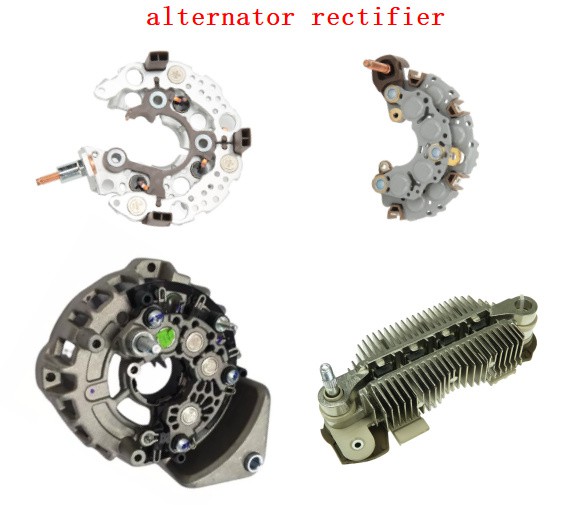
Rectification (alternator rectifier AC to DC)
The AC current travels to the diode rectifier. The diodes act like one-way gates, blocking the current from flowing backwards. They "chop up" the AC wave and channel it into a steady, one-directional direct current (DC).

Voltage Regulation(alternator regulator)
The voltage regulator senses the system's voltage. It constantly adjusts the small amount of current flowing to the rotor's electromagnet to ensure the alternator produces exactly the right amount of power (typically between 13.8 - 14.8 volts) to run the car and charge the battery without overcharging anything.
7.Output: The clean, regulated DC power is sent out to:
Power all the vehicle's electrical systems (lights, ECU, radio, etc.).
Recharge the battery.
What size alternator do i need
The size of an alternator you need is measured in amps (A). There are two main ways to figure it out:
For a Standard Replacement
You need an alternator with the same or higher amp rating as your original one.
To find this rating, look at the label on your old alternator. The amp number (e.g., 120A, 150A) is almost always printed on it.
If You're Adding Powerful Accessories
If you are adding high-power equipment like a big sound system, off-road lights, or a winch, you need to calculate your total electrical need.
Find your car's base electrical need
This is usually about 30-50 amps to run the engine, fuel injection, lights, etc.
Add the amps for your new accessories
Check the manuals or specs for each device to see its amp draw (or take its wattage and divide by 14 to get amps).
Add them together
Base Need (e.g., 40A) + Sound System (e.g., 60A) + Lights (e.g., 20A) = Total Need (120A)
You would then choose an alternator that meets or exceeds your Total Need.
Simple rule
For most inventory cars, simply match the original rating. If you want to add powerful gears, you may need a high output AC generator (such as 200A+). If you have any questions, please contact us.
FAQ
As one of the leading alternator manufacturers and suppliers in China, we warmly welcome you to wholesale cheap alternator from our factory. All custom made products are with high quality and competitive price.