

The pinion gear (small drive gear on the starter motor) meshes with the engine flywheel ring gear to crank the engine. The number of teeth - commonly 8T, 9T, 10T, 11T - is one of the critical matching parameters when selecting a replacement starter motor.
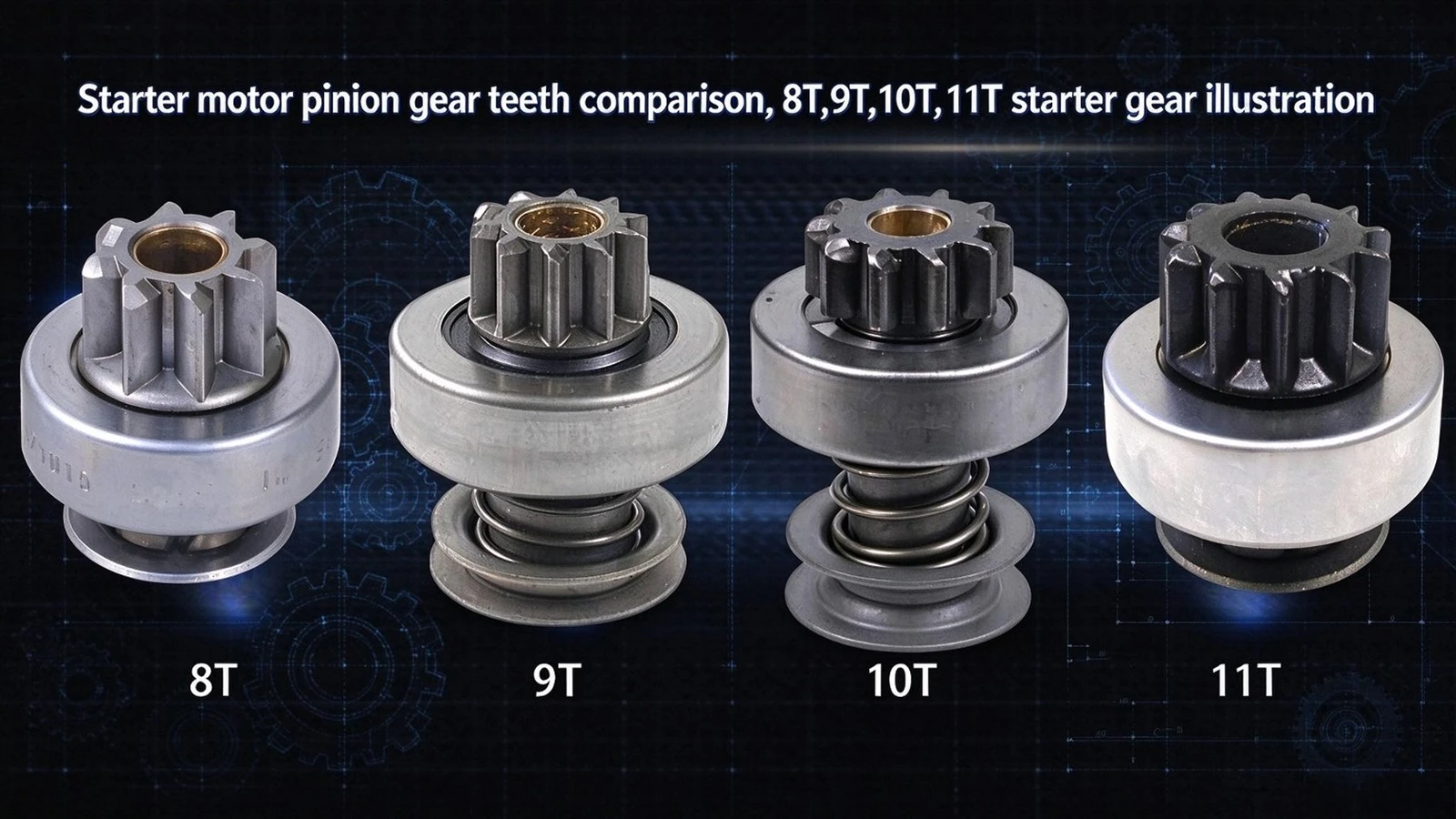
Why Starter Pinion Gear Teeth Matter
The pinion gear teeth must perfectly match the flywheel ring gear specification. Each engine model is designed for a fixed tooth count.
- 8T: Widely used for small gasoline engines and compact equipment starters
- 9T: Common for many light-duty petrol engines and small machinery
- 10T: Typical for medium-duty industrial & agricultural engines
- 11T: Frequently seen on diesel engines, heavy-duty construction & marine equipment
Risks of Mismatched Teeth
If you install a starter with wrong pinion teeth, the gear cannot engage properly with the flywheel:
- Gear clash, grinding noise when cranking
- Partial or failed engagement, engine cannot start
- Rapid wear, broken pinion teeth or damaged flywheel ring gear
- Premature starter motor burnout, costly downtime for your machine
Important: Even if the starter voltage, power and OEM number look correct, mismatched pinion teeth will make the starter unusable. Always verify tooth count before ordering replacement starters.
FAQ
Q: Can I modify the pinion gear to fit a different flywheel?
A: Not recommended. Modification changes gear pitch and alignment, leading to fast gear failure. You need a starter with the correct factory-specified tooth count.
Q: Is tooth count the only thing I need to check for matching?
A: No. You also need to confirm voltage, mounting position, power rating and OEM part number together with pinion teeth.
👉 Browse our Starter Motor products with listed 9T and 11T pinion gear specifications for your equipment.
https://www.she-star.com/starter/denso-starter/reference-number-0280007830-2280001070-kubota.html
https://www.she-star.com/starter/denso-starter/reference-number-denso-dsn2084-028000-4200.html