

A starter motor is the component that cranks your engine to start. It converts electrical power from the battery into mechanical rotation. Below is its simple working flow and key parts.
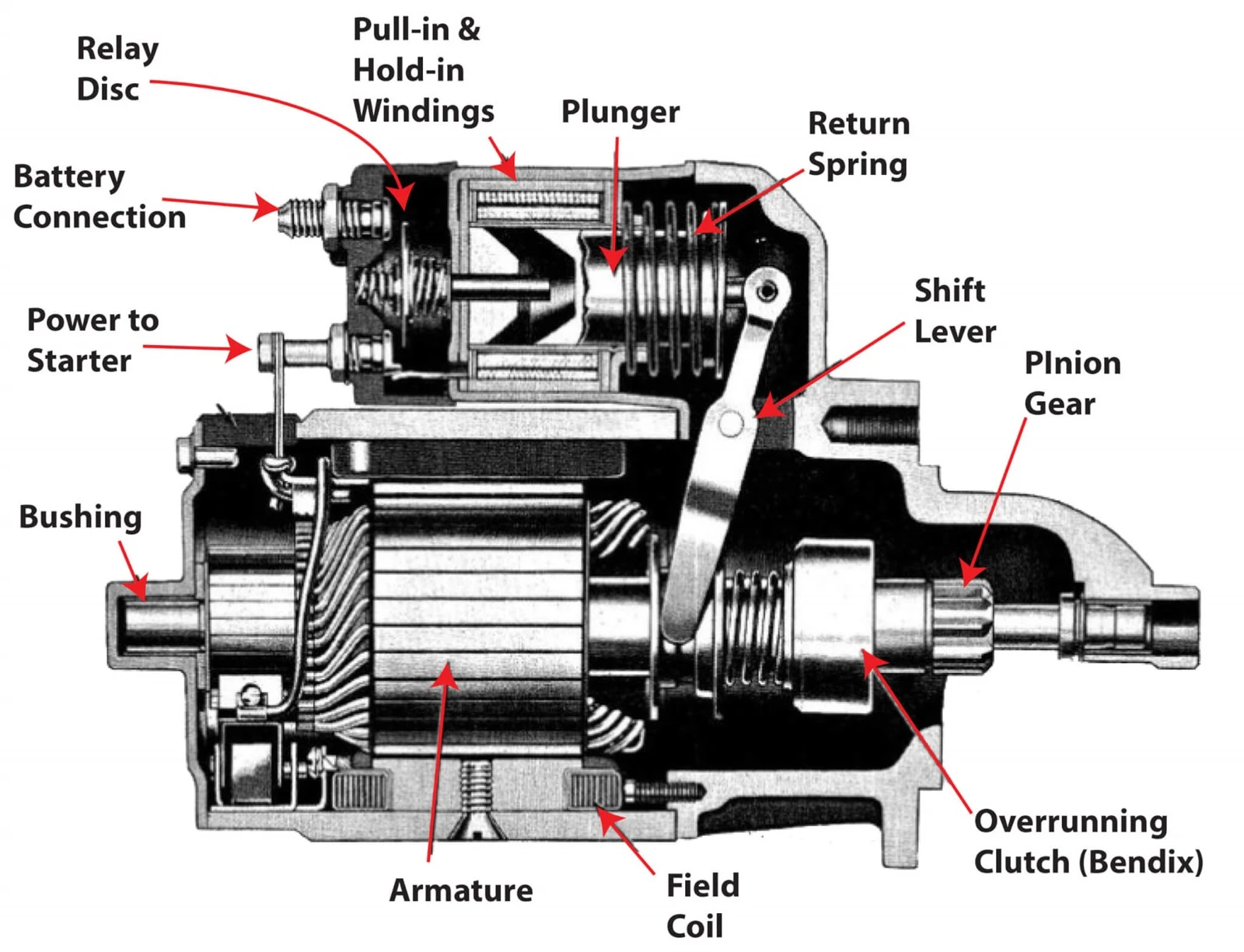
Main Components
Solenoid: Electromagnetic switch. It pushes the pinion gear forward and connects heavy current to the motor.
Armature: Rotating coil assembly inside the motor, generates torque when powered.
Pinion Gear: Small gear on the starter shaft, engages with the engine flywheel temporarily.
Flywheel: Large gear ring on the engine, turned by the pinion to crank the engine.
Working Sequence
Battery: Supplies high electric current when ignition key is turned.
Solenoid: Activates, pushes pinion gear forward to mesh with flywheel.
Motor (Armature): Receives power and starts spinning.
Pinion Gear: Drives the flywheel.
Engine Cranking: The flywheel rotates the engine until it ignites and runs on its own.
Once the engine starts spinning, the pinion gear disengages immediately. The starter motor stops and waits for the next start command.
If your starter makes clicking noises or fails to crank, inspect the battery and wiring first before replacing the unit.
👉View Link:https://www.she-star.com/starter/
FAQ
Q1: What is the most common failed part inside a starter motor?
The solenoid and brushes are the most frequent wear parts, followed by damaged pinion gear.
Q2: Will a starter keep running after engine startup?
No. The pinion gear retracts and the starter cuts out once the engine fires.
Q3: Can low battery damage the starter motor?
A weak battery causes repeated solenoid engagement and overheating, which shortens starter service life.