

The starter motor and alternator are two core parts of the automotive electrical system, but they serve completely different roles. Many buyers and repairers mix them up during troubleshooting or part replacement.
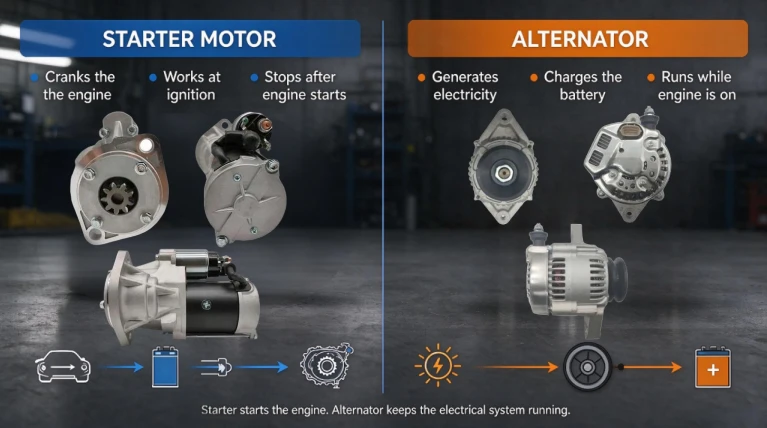
Starter Motor
The starter motor only works when you start the engine. It draws heavy current from the battery to crank and turn over the engine. Once the engine fires up, the starter stops working immediately. 👉 View link: https://www.she-star.com/starter/
Alternator
The alternator takes over after the engine is running. It is driven by the engine belt to generate electricity. It supplies power for vehicle electric devices and recharges the car battery. 👉 View link:https://www.she-star.com/alternator/
Quick Summary of Differences
Starter: Starts the engine (works only at ignition)
Alternator: Produces power & charges battery (runs while engine is on)
A common mistake: If your vehicle fails to start, it may not always be a faulty starter. Low battery or bad wiring can create similar symptoms. Check the battery first before replacing any parts.
FAQ
Q1: Can a bad alternator damage the starter motor?
A weak alternator will drain the battery. A flat battery cannot supply enough power to the starter, which may look like a failed starter motor.
Q2: Do I need to replace starter and alternator together?
No. They are independent components. Replace only the faulty unit after proper inspection.